
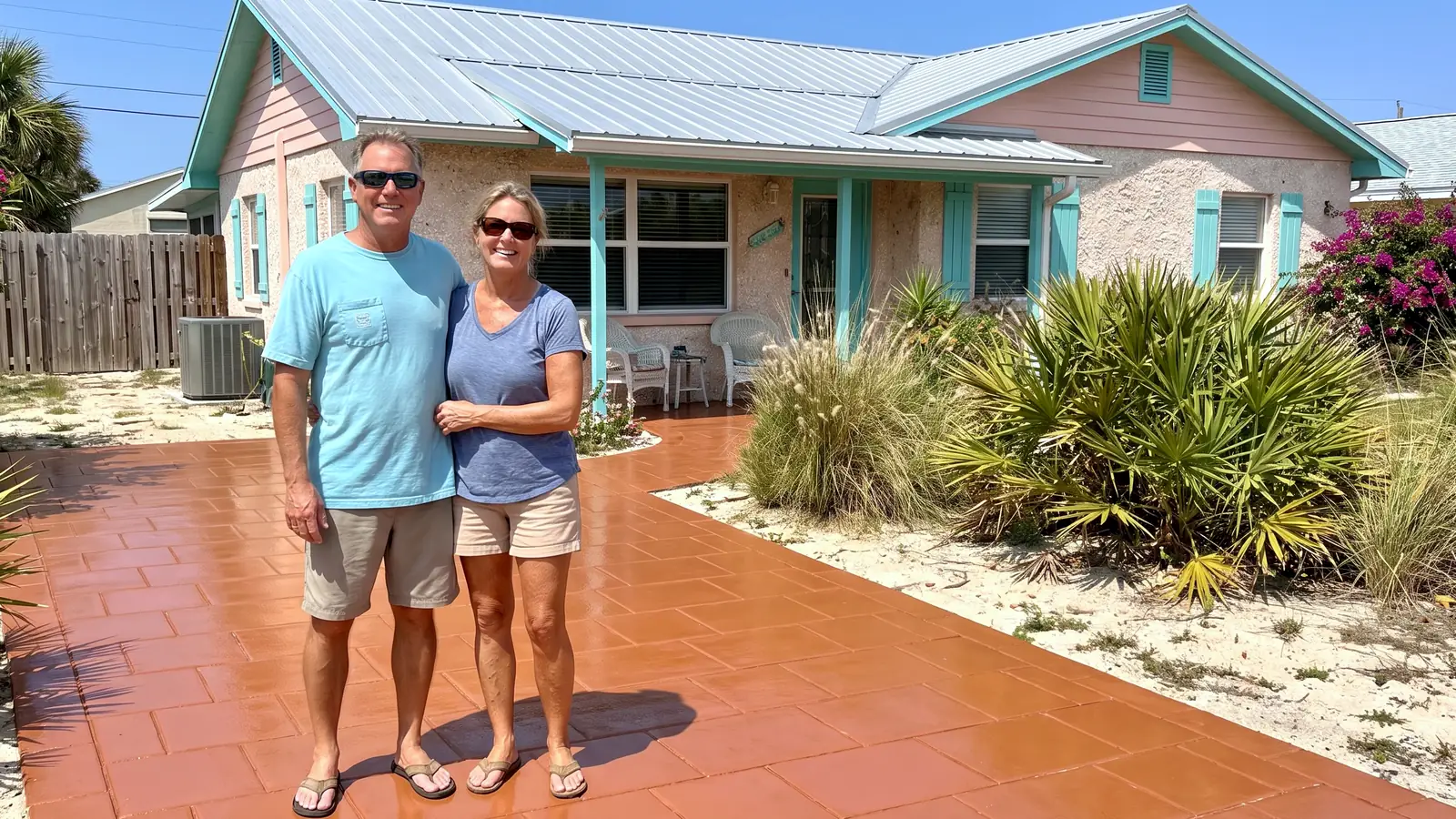
Paver sealing for Seminole Heights homes
Paver Sealing in Seminole Heights, FL
Between Florida Avenue and Interstate 275, Seminole Heights homeowners can call (656) 254-3220 for a free paver sealing estimate.
- Brings out deeper paver color
- Fresh joint sand helps lock pavers in place
- Gives weeds less room to grow
- Makes the surface easier to keep clean
- Free estimate, no obligation
Request a Free Estimate
Free, no obligation.
Fast, careful paver sealing in Seminole Heights
Paver sealing in Seminole Heights comes with a free estimate from a local contractor, whether your pavers sit beside a bungalow porch or behind a newer fence. The crew washes the surface, refills the joints and seals it. Start with ask for a free estimate; a reply comes inside 1 business day, usually much sooner.
Think of the front walk that runs to your porch steps. Over the years it has gone gray, and green has settled into every joint. Cleaning, fresh sand and a sealer coat can make it look the way it did when it was laid. Call (656) 254-3220 to describe it; there is no obligation.
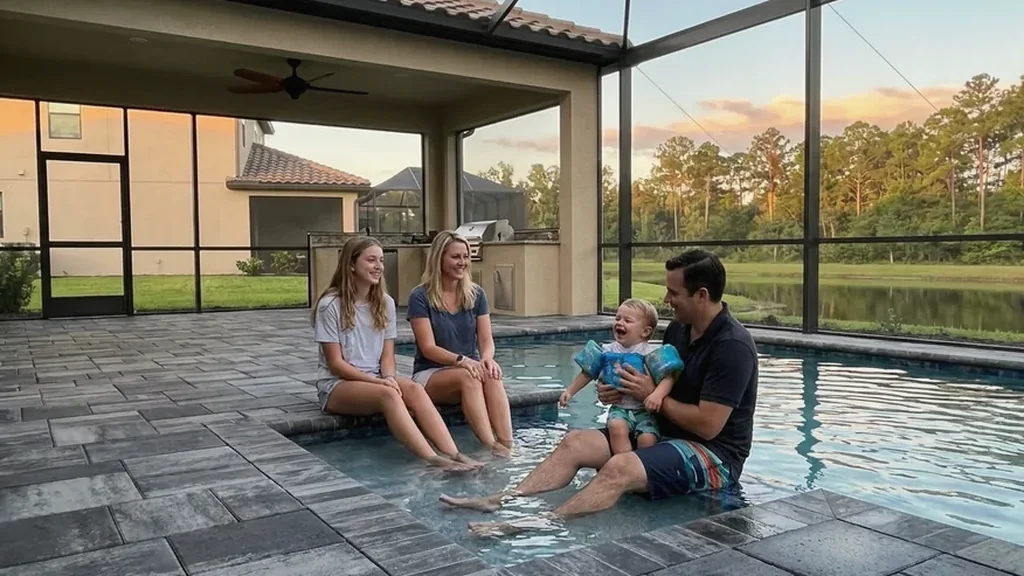
Why hire a local paver sealing contractor in Seminole Heights?
Seminole Heights homes are old, close together and full of detail, so the contractor you hire plans for narrow lots and aged materials. To ask how that applies on your block, ask for a free estimate.
A free visit
The contractor measures your Seminole Heights walk, drive and patio at no charge and writes down a price before any work is booked or signed.
A range to hold bids to
A published Tampa Bay range of $1.25 to $2.50 per square foot covers cleaning, new sand and the coat. Hold any Seminole Heights bid to it.
A finish for the porch
Matte stays quiet beside a Craftsman front. A wet look adds shine but shows scuffs sooner. The choice is yours.
Care near old wood and brick
Ask how rinse water and cleaners will be kept off aged siding, porch posts and brick piers, and what the contractor tests first on a small patch.
Get Your Free Estimate in Seminole Heights
Tell us about your pavers in Seminole Heights.
Free, no obligation
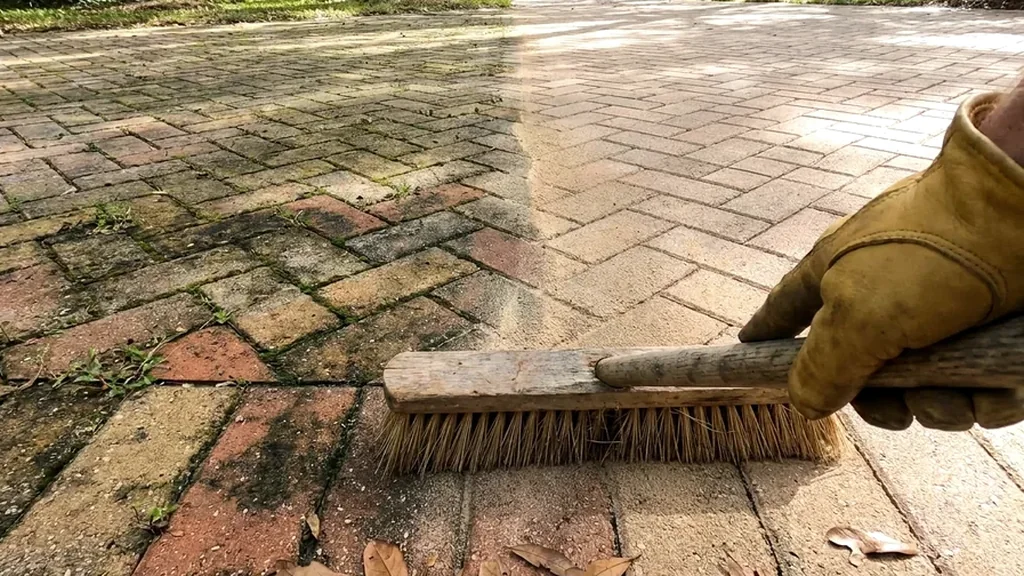
What paver problems show up most in Seminole Heights?
Porches, piers and old siding
The Seminole Heights Residential District went up between 1912 and 1928 in Bungalow, Craftsman and Gothic Revival styles. Pavers laid beside a house that old sit close to aged siding, porch posts and brick piers. Strong cleaners and hard spray can mark or soften them. A good contractor asks what your house is made of and tests a small patch first. Stucco and brick also soak up water, so the spray angle counts. If the house is in a historic district, say so at the estimate.
Damp ground by the river and Lake Roberta
Seminole Heights holds the longest stretch of riverfront parkland in Tampa, and the Hampton Terrace district wraps around Lake Roberta. Ground near water tends to hold moisture. Pavers do not grow algae unless shade is heavy, and cleaning treatments do little where a surface stays damp. A walk on the shady side of a bungalow may need more frequent washing. The north side of a house and the spots under trees dry last. A walk that turns green again within a season usually points to shade, not a failed coat.
Downpours that rob the joints
Tampa's afternoon storms come from Gulf and Atlantic sea breezes and often arrive as heavy downpours. Rain peaks in a wet season that the Weather Service counts from May 25 through October 10. Water runs along the seams and takes sand with it, so soil and weeds move in. Sealing over empty joints wastes product, which is why sand goes in before the coat. Open joints also let ants in and loosen edge pavers. Replacing that sand is cheap, and leaving it out gets pricey. A fresh coat also slows sand loss in the next season.
A coat from a century of owners
Many houses here have changed hands since the 1910s and 1920s, and so have their paver paths. An earlier owner may have picked a product that was never written down. A water-based sealer will not stick over a solvent-based one. The contractor identifies the existing coat before picking the next product. A flaking or blotchy surface suggests the old film is giving out, and a tiny test spot can sometimes show the type. Receipts or product names found in a garage drawer are worth keeping.
Narrow lots with little room
The first houses here were set east to west on platted lots, and the neighborhood grew up with tight side yards. Little room means gear is carried in by hand and runoff has few places to go. Hedges, cars and the neighbor's fence all sit close to the work. Planning matters more than on a wide suburban drive. Tape and tarps are part of a normal job on a block like this. Ask who handles the setup before the job day. Cars parked along the curb also limit where the crew can stage its gear.
Does paver sealing change between Old Seminole Heights and the southern blocks?
Somewhat, because the housing shifts as you move. Old Seminole Heights holds the Hampton Terrace district, where about 470 Bungalow and Craftsman homes ring Lake Roberta. South Seminole Heights and Southeast Seminole Heights are separate neighborhoods inside the wider district, each with its own streets. When you ask for a free estimate, say which one you live in.
The core runs from Florida Avenue on the west to Interstate 275 on the east and from Hanna Avenue down to Osborne Avenue. It opened in 1911, and Suwanee Heights followed by 1912, with houses again set east to west. Call (656) 254-3220 and name your street, plus any nearby cross street.
A local historic district here was set by the Tampa Architectural Review Commission in 1995, so the city can review exterior changes. Sources do not say whether sealing pavers counts. Ask city staff before a larger change, then ask for a free estimate once you know what applies to your property.
What does paver sealing cost in Seminole Heights?
Around Tampa Bay, shops list $1.25 to $2.50 per square foot for cleaning, sanding and sealing pavers. A front walk and porch steps are small, so a minimum charge may apply, as the cost guide notes. What moves the rate in Seminole Heights is shade, green growth, lost sand and an old coat. To get a measured number and a split between washing and sealer, ask for a free estimate.
Access matters too. A narrow drive beside a bungalow takes longer than an open slab since tools are carried by hand and runoff is controlled around the house. A back patio with only a gate to reach it adds time, and so does a second visit after a wet day. Phone (656) 254-3220 and the contractor will say which of these fit your Seminole Heights property, including rust treatment.
| Paved area | Typical example | Clean, sand and seal |
|---|---|---|
| 300 sq ft | Small patio or walkway | $375 to $750 |
| 600 sq ft | Two car driveway | $750 to $1,500 |
| 1,000 sq ft | Large driveway or pool deck | $1,250 to $2,500 |
| 1,500 sq ft | Driveway plus pool deck | $1,875 to $3,750 |
Math based on the $1.25 to $2.50 per square foot that Tampa Bay paver companies publish. Your contractor sets the actual price after seeing the surface. Repairs, leveling and stripping failed sealer are usually extra.
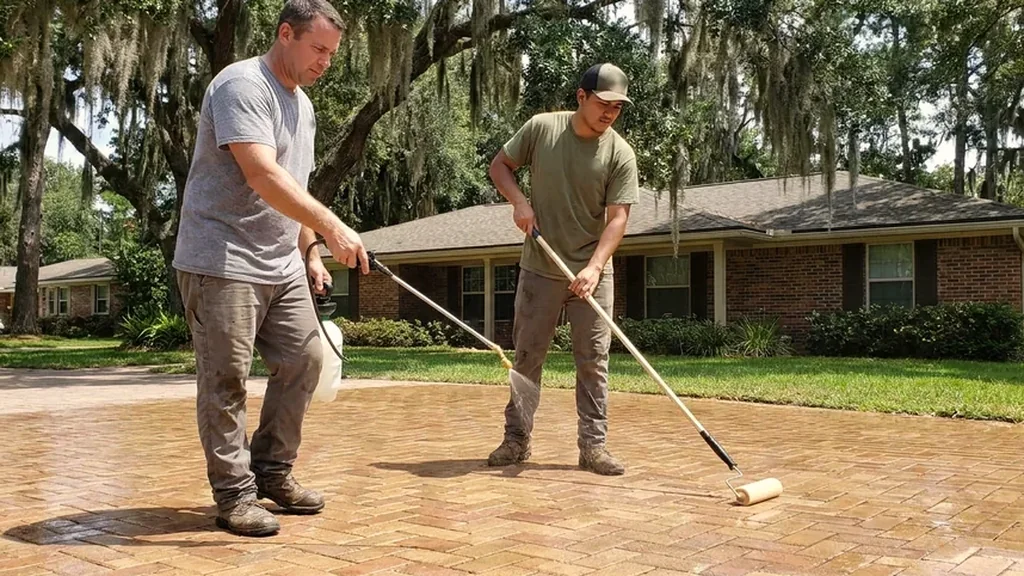
How does a paver sealing job work in Seminole Heights?
Walk the walk, drive and patio
The contractor measures each surface and notes the house materials beside it, such as wood, brick or plaster. Dips are marked, because sealer would hold a dip in place. An old coat, if there is one, decides which sealer type can follow. Say whether the house sits in a historic district. Photos go into the written price. Measuring tools give an exact square footage, which keeps the price honest.
Wash gently near the house
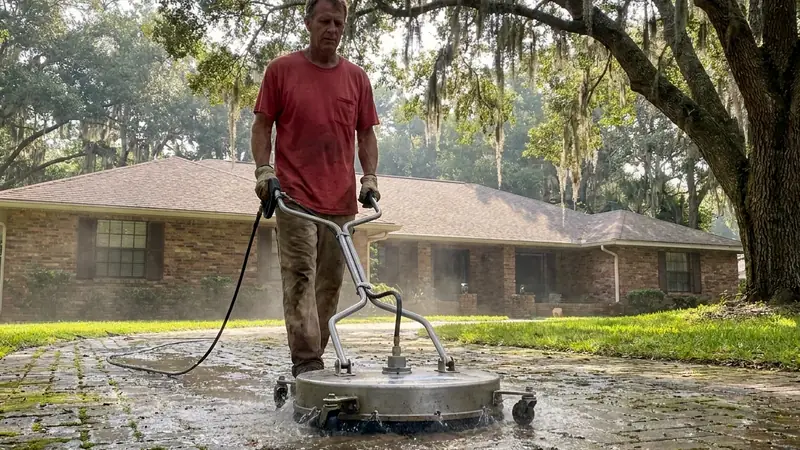
The wash removes green film, mildew and grime. Near porches the crew keeps pressure and rinse water gentle and covers planting beds. Rust spots and other stains are handled on their own. Runoff is directed away from the neighbor's fence. A walk can look fine from the street and still wear a gray film that shows up when a wet patch dries. Plants near the work get covered or rinsed first.
Put the sand back
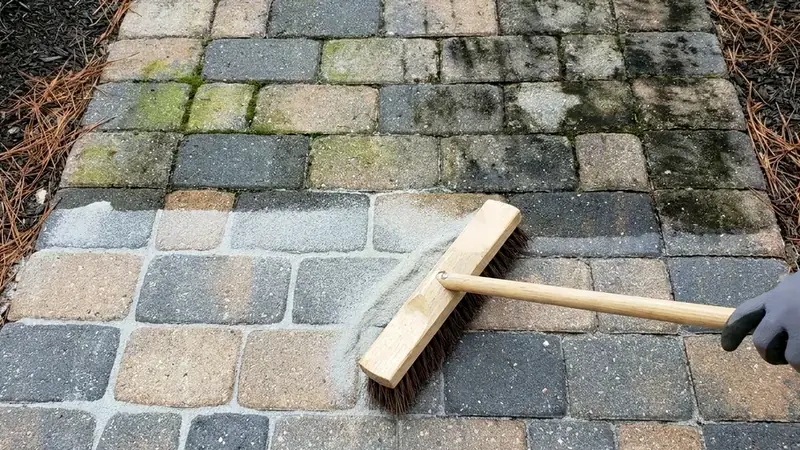
Washing pulls sand from the joints, so new sand goes in before the sealer. Filled joints hold the pavers snug and leave weeds little room to start. Once the joints are packed, a broom clears the surface. Pavers at the edge of a walk benefit most, since they loosen first. A final broom pass tidies the top.
Let the surface dry
The coat needs dry pavers, and summer storms in Tampa build in the afternoon. A shaded back patio may stay damp long after the front walk is dry. The contractor checks the pavers and the forecast before opening the can. A day of waiting is cheap beside redoing a hazy coat. Waiting costs little, and a short delay is easier than a redo.
Seal and plan the wait
The coat then goes on in the finish you selected. Quotes for time between coats generally run two to five years, and one Tampa-area company says a covered, shaded lanai may go as long as ten. Ask how soon you can walk on it and when the car can return. A second coat on the busy porch path can be raised at the estimate. You can also ask for the product name so the next coat matches.
Complete paver services in Seminole Heights
Seminole Heights jobs follow one order: wash, re-sand, dry, seal. The wash lifts green film and grime from the walk, and new sand fills the joints. The coat goes on last so nothing dirty is trapped under it. To learn how long the stages would take at your address, call (656) 254-3220.
The front walk and porch steps are what visitors see first, and they turn green first where shade is heavy. Driveways take tires, while back patios hold chairs and planters. Each surface wears in its own way and may need its own plan. Say which of these apply when you ask for a free estimate.
The sealer is water-based or solvent-based, in a matte or wet finish. A water-based type cannot sit over a solvent-based coat, so what is already there decides. On a 1920s Craftsman front, matte keeps the pavers from outshining the house, while a wet look deepens color but shows scuffs sooner. Call (656) 254-3220 to discuss which finish fits.
Tampa's weather sets the schedule. Summer afternoons bring storms that can end a job early, and sealer needs a dry surface. Many owners book in spring or fall for the longest dry stretches, though a summer rain delay is normal. For a date that fits your week, ask for a free estimate.
Questions to ask before you hire
- How long should I wait before sealing again, and what shows it is time?
- How soon after sealing can the sprinklers run and the cars park on the driveway?
- What should I do before you arrive, such as moving cars and patio furniture?
- What do you do about the green algae that creeps over my pavers every summer?
- Do you charge extra if some pavers have sunk or shifted?
- Does the quote cover the pressure wash, new joint sand and the sealer itself?
- How do you find out how many square feet my driveway and lanai really are?
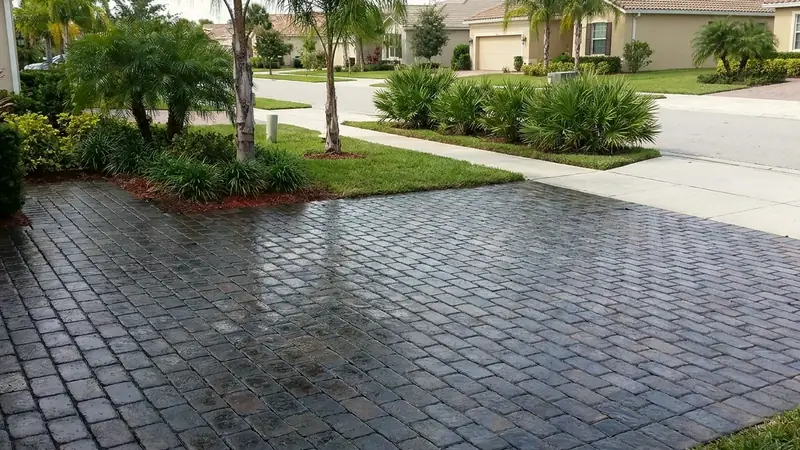
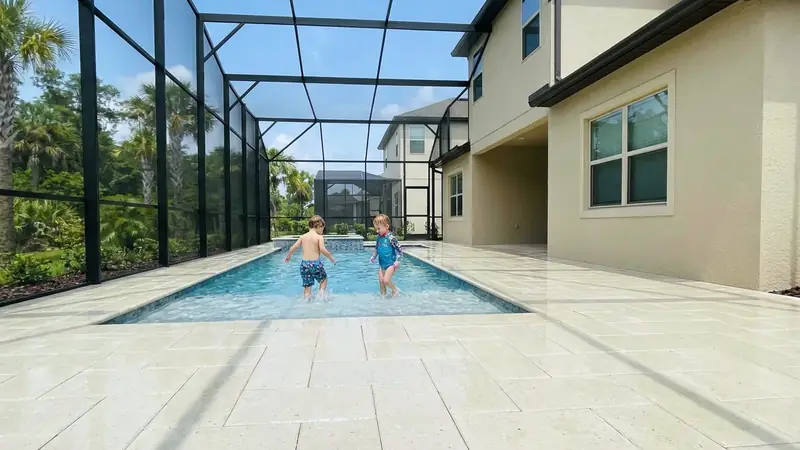
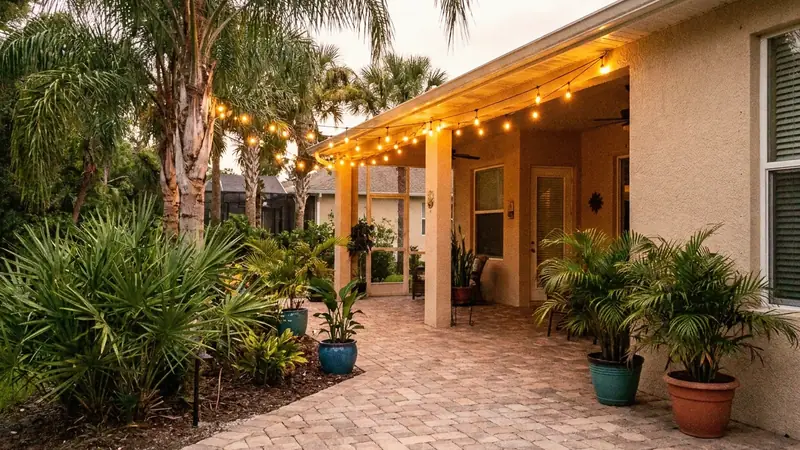
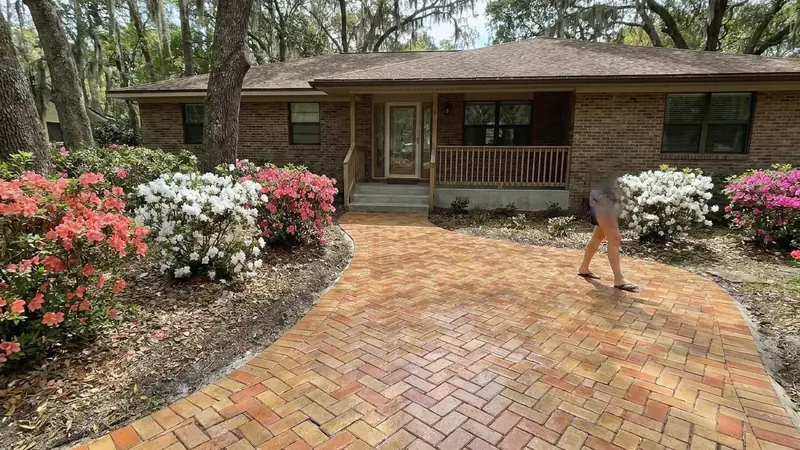
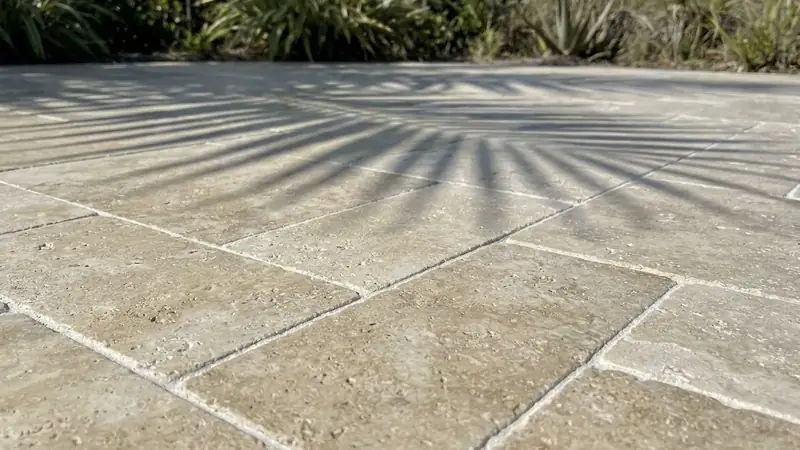
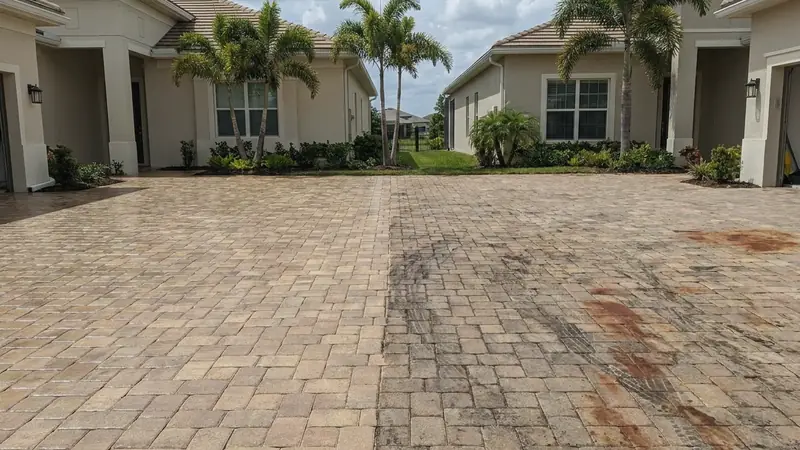
What do sealed pavers look like around Seminole Heights?
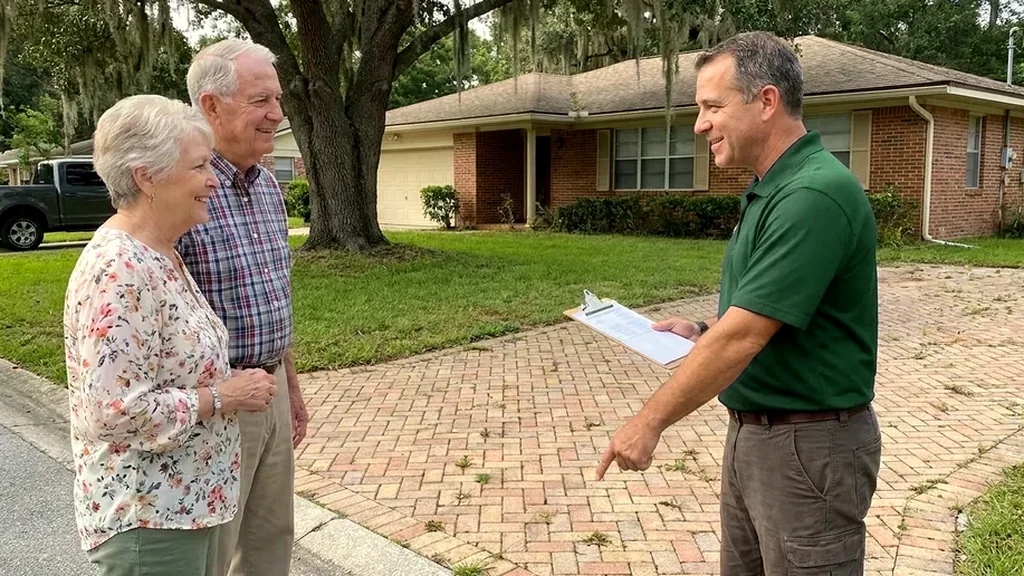
Why local matters in Seminole Heights
A contractor who works Seminole Heights knows these are old homes on compact lots. That changes how a crew parks, hauls gear and handles runoff, and how it protects hedges and fences. Someone who mostly works large new lots may not plan for it. To reach a contractor who knows central Tampa, call (656) 254-3220.
The neighborhood has both a National Register district and a local historic district, and a contractor familiar with it knows to ask about review. Afternoon storms in this part of Tampa arrive fast, so scheduling matters as well. For details on how that works in practice, ask for a free estimate and ask.
The houses also vary a great deal. A 1912 bungalow, a 1920s Gothic Revival home and a newer infill house can sit within a few blocks of each other. The wash and the finish get adjusted for each one by a contractor who knows the area. To describe your house, ask for a free estimate, with no obligation to hire.
Why is Seminole Heights called Tampa's first suburb?
Because developer Young laid it out in 1911 on 40 acres about three miles north of downtown. A trolley line made it possible to live here and work elsewhere. The early houses were bungalows priced from $5,000, and Suwanee Heights followed with homes from $1,400. Near the Garden Center or Rivercrest, call (656) 254-3220.
Early landmarks remain, including Seminole Heights Methodist Church, St. Paul Lutheran Church and Hillsborough High School. Epps Park and Rivercrest give access to the Hillsborough River, and the Garden Center hosts art festivals and picnics. Hampton Terrace joined the National Register in 1999. If you live close to one of these places, ask for a free estimate and give your street name.
Frequently Asked Questions
What is the per square foot price to seal in Seminole Heights?
The posted Tampa Bay range is $1.25 to $2.50 per square foot to clean, sand and seal. A Seminole Heights job falls inside it based on shade, missing sand and any old coat. Small walks may carry a minimum charge. Ask for the figure in writing. Since the visit is free, you can ask about any line.
Does sealing pavers have a downside in Seminole Heights?
The trade-offs are upkeep and timing. A coat wears and needs renewing, a wet look scuffs more visibly than matte, and a damp surface has to wait. A run of storms can push a Seminole Heights job back. Some owners find the easier cleaning worth the upkeep.
Is it better to spray or roll paver sealer in Seminole Heights?
Plenty of contractors spray first and then back-roll to push sealer into the joints. Overspray counts on tight Seminole Heights lots, so ask how plants, cars and siding are protected. The method matters less than clean, dry pavers. Spraying also gets into corners that a roller skips.
What is the average cost to seal pavers in Florida, and does Seminole Heights differ?
The Tampa Bay range of $1.25 to $2.50 per square foot applies to Seminole Heights too. Tight access, shade and old sealer can push a job toward the top. A small porch walk may fall under a minimum charge. Compare any bid against the same range. Ask which part of the price is washing and which is the sealer.
Do I need city approval to seal pavers in Seminole Heights?
It depends on your address. Seminole Heights has a National Register district and a Local Historic District set by Tampa's Architectural Review Commission in 1995. Ask city staff whether sealing counts before work starts. A short call can also settle whether a permit applies. Keep any approval letter with your paver records.
Is a new coat allowed over the sealer already on my Seminole Heights pavers?
Only if the types match. A water-based sealer cannot sit over a solvent-based coat, so the old product must be named first. If the old product is a mystery, tell the contractor at the visit. A patch test in a corner can help. Sealing over the wrong type can peel.
How often do pavers need sealing in Seminole Heights?
Typical quotes for time between coats run from two to five years. A shaded covered lanai may last far longer, up to about 10 years by one company's count. Open driveways and walks in full sun sit toward the short end. Check the joints and water beading to judge wear. A fall check after the wet season is common.
How long should I stay off pavers after sealing in Seminole Heights?
One Tampa Bay cost guide puts walking at about 24 hours and driving at 48 to 72 hours. Weather and product can change that. The contractor can confirm the wait that fits your day. Pets and bikes should stay off until then as well. Keep the street parking plan in mind until the coat is ready.
What questions help when choosing a paver sealer in Seminole Heights?
Find out what the quote includes, how the area was measured and which product and sheen are planned. Ask how runoff will stay off old wood and brick, and who reschedules if rain interrupts. Have the answers written down first.
Ready for a Free Estimate in Seminole Heights?
Call (656) 254-3220 and tell us about your pavers.
Free, no obligation